
Advancement between training tiers can stall on records. A trainee who treated patients but never logged them has little to show when the next tier asks for proof.
What the tiers ask for
PubMed Central hosts a review describing a tiered path. On the first step it states: "Completion of Tier 1 requires a log of completion of the number of novice procedures as well as written and practical assessments."
Further along, the same source says: "A written exam along with practical assessment, and completed documented number of competency procedures is required for advancement to Tier 3."
Both requirements share a pattern. The count of procedures has to be documented, and an exam or practical assessment sits beside it.
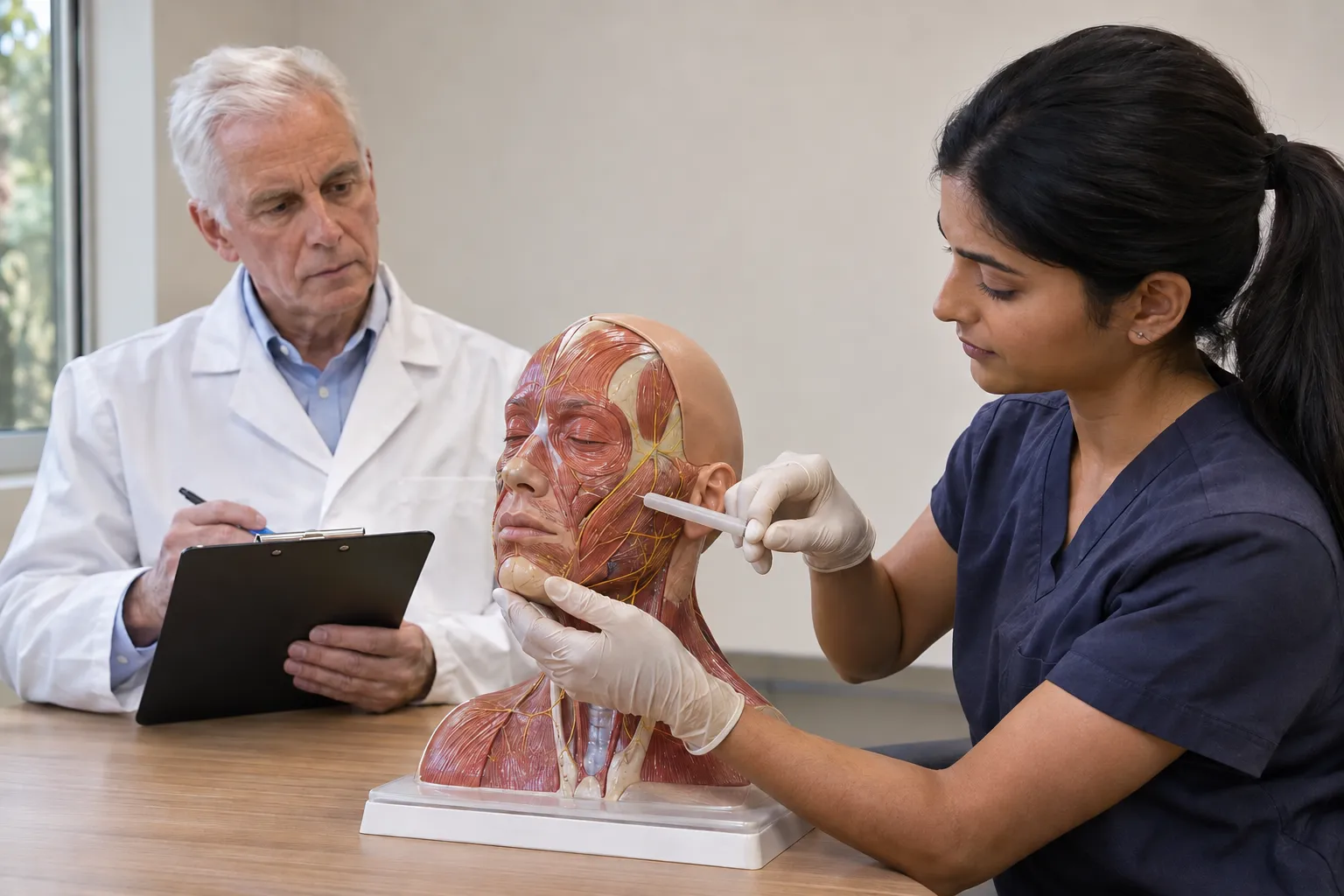
Practice before the assessment
Practice comes in several forms. Readers can look at Wikipedia's entry on the cadaver and Wikipedia's entry on medical simulation for background on two ways trainees practice.
A habit that protects your progress
Log every procedure the day it happens. If you train in Parsippany, New Jersey or anywhere nearby, a case log kept current is what lets you sit an assessment without a scramble.
Once the log is current, have a second person read it. Plastic Surgery Practice describes who that reviewer might be in its article on AAAMS mentors working with early-career injectors.